Outfit Tips for Being Photographed with Your Dog
Choosing what to wear for photos with your dog can feel deceptively complicated. You want the images to look timeless, flattering, and cohesive — without feeling like you tried too hard.
But here’s the thing I’ve learned as a Minneapolis dog photographer: outfits matter less than connection… but they still play a big role in how your portraits feel.
When you step into the studio with your dog, you want the focus to be on your relationship, not on distracting patterns, clashing colors, or outfits that date the photo before it’s even printed.
Here’s how I think about styling for portraits where humans and dogs are in the same frame.
The Goal: Timeless, Comfortable, Complementary
Portraits are meant to last — on walls, albums, and in memory. So I always encourage outfits that feel personal but won’t compete with the emotional tone of the image.
That starts with three simple principles:
1. Coordinate — don’t match.
You’re not trying to wear the exact same outfit as your dog (obviously). Instead, choose colors that harmonize with your dog’s coloring and with each other if there’s more than one person in the photo. Think soft neutrals, earthy tones, and colors that feel cohesive together without being identical.
2. Minimize bold patterns.
Bright stripes, huge logos, and loud prints can draw attention away from what’s most important — the emotional connection in the image. Subtle textures and gentle prints photograph beautifully without overpowering the frame.
3. Choose timeless over trendy.
Trends fade. Portraits don’t. Classic looks — simple tops, soft knits, clean lines — age well in photos and keep the attention on you and your dog, not your outfit.
Outfit Ideas that Photograph Well
Here are some combinations I see work beautifully in studio sessions:
Neutral tops + textured layers (sweaters, scarves, denim jackets)
Earth tones — warm browns, soft greens, creams, and muted blues
Simple accessories — nothing that jangles or distracts your dog
Avoid bright whites unless balanced with deeper neutrals (studio lighting can make pure white blow out)
And a general tip: comfortable clothing equals beautiful photos. If you’re tugging at your shirt or adjusting your collar in every pose, it shows in the images. Comfortable simplicity often reads as elegance on camera.
What to Wear with Different Dog Coats
Different dog coats interact with colors differently — and that’s okay.
Light-colored dogs: Rich, warm tones like burgundy, forest green, camel, and slate gray help create contrast.
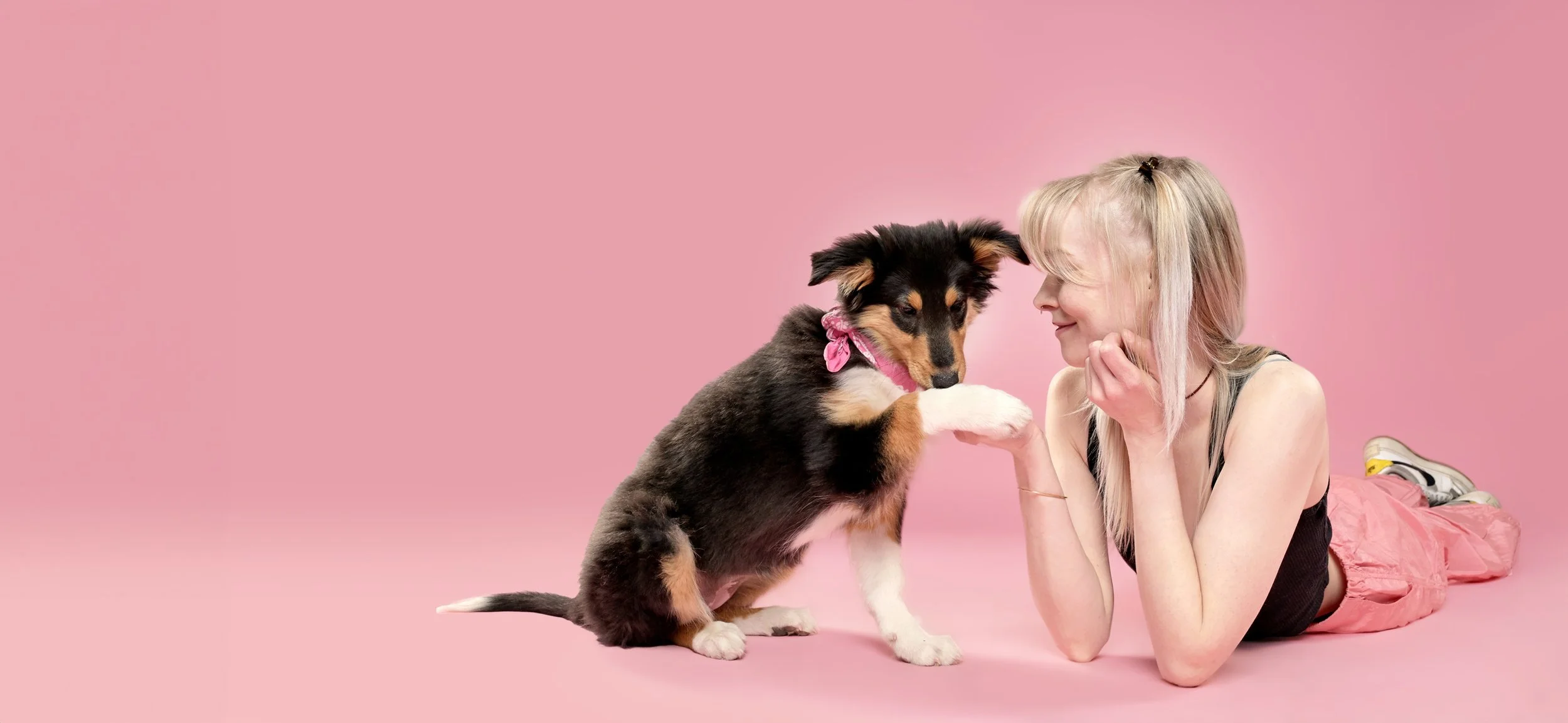
Dark-coated dogs: Soft pastels, creams, and lighter neutrals keep the frame from feeling too heavy.
Brindle, multi-tone coats: Earth tones that echo small elements of their fur tie everything together without competing visually.
I always look at your dog’s coloring when planning wardrobe suggestions because when your outfits complement your dog’s natural tones, the portraits feel more unified and effortless.

Parents + Kids + Dogs: A Recipe for Harmony
If you’re including human siblings too, outfits follow the same principles: keep tones cohesive, textures soft, and prints minimal. A few guidelines:
Pick a main color palette (e.g., creams, denim blues, soft browns)
Let each person interpret it in their own style (layering helps!)
Keep shoes and accessories low-profile unless they add intentional, meaningful flair
What matters most isn’t perfection — it’s that your family feels like yours in the photos.

Studio Lighting + Color Awareness
Studio lighting captures color differently than natural light. Some colors feel richer; others can appear muted. Solid colors and layered neutrals almost always photograph best because they interact with the lighting predictably, highlighting connection and expression instead of pulling focus.
And since a studio session captures emotion and nuance, the goal of outfit styling is to enhance your presence in the image — not to create distractions.
Clothing Choices That Don’t Work as Well
There are a few things I commonly steer families away from:
Logos or loud graphics that pull focus
Neon or extremely bright colors that reflect onto fur or skin
Styles that feel stiff or uncomfortable (ones you’re tugging at the whole time)
These aren’t rules — just suggestions that help portraits feel calm, cohesive, and timeless.
Style Is Personal — But Visual Harmony Helps
At the end of the session, it’s not about who wore what — it’s about how it felt. When outfits support the emotion of the moment and help you (and your dog) feel comfortable, the portraits reflect that ease.
Many clients tell me afterward that once the photos are on their wall or in an album, they barely notice clothing — but they do notice the emotion, the connection, and the way their dog looks at them.
That’s the goal.
If you’re thinking about colors or outfits and want help figuring out what will photograph beautifully with your dog, feel free to mention it when you request a session. Knowing your style helps me tailor lighting and backdrop selections so your portraits feel cohesive, intentional, and uniquely yours.